
Parents crusade against children being exposed to screens in school, questioning the use of AI and social media.
Here’s a problem. Many states have mandated the Science of Reading for young children in the name of scientific evidence; they and local school districts have invested millions in programs that often involve heavy screen use.
The READ Act Ignores the Overuse of Screens to Teach the Science of Reading
The current READ Act (Reading Excellence and Achievement for Development) doesn’t appear to mention online programs in the Science of Reading. They don’t mention technology or screen usage. Yet those programs are pervasive in America’s public school classrooms.
Such digital instruction has been used in classrooms for years yet receives little scrutiny amid claims that children are not being taught to read.
Reading, more than any other subject, has been used as a bellwether for how public schools fare, and to make exorbitant profits from programs, many of them online, that are supposed to fix reading problems in children.
AFT President Randi Weingarten recently condemned excessive screen use, especially noting that children in grades K-2 should not be exposed to screens in class. But she also highlighted the Science of Reading. She doesn’t mention screen usage for it.
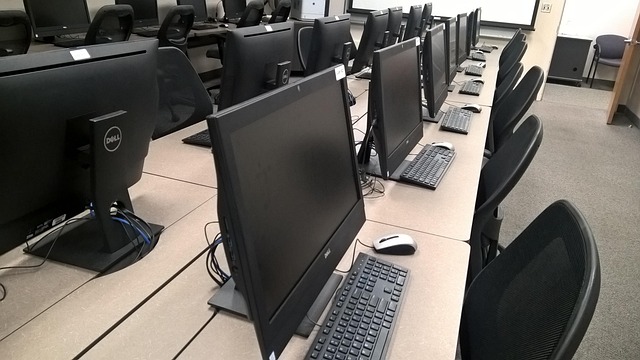
Isn’t having early learners face screens to learn to read questionable as well?
It shouldn’t go unnoticed that the Science of Reading is used by tech companies to sell their wares, and quite a few Science of Reading promoters have been all too willing to do podcasts and ads promoting these programs.
There has also been concern about that nasty data collection on kids. It hasn’t gone away. And while online instruction during COVID was meant to keep children and families safe, parents have had enough of it.
Still, less is said about how a child may sit in front of a computer to learn sounds or do other online reading exercises. These tech programs continue to suck revenue from school budgets, and they go a long way toward controlling what teachers teach.
Seattle’s school board recently approved $ 5,775,774 to purchase McGraw-Hill Emerge for teachers to use through the 2032-33 school year (Bryon, 2026). Or $9 million over time. It’s a heavily scripted program that promises a Science of Literacy.
Sticking such high price tags on these programs means teachers (schools) are stuck with them for years even if they don’t work.
This program starts in kindergarten with much phonics, and even when it focuses on books, teachers are told exactly what to read with students. It’s easy to see that the teacher becomes expendable. All one needs is someone good at following directions.
There are also troubling developmental changes in kindergarten that push phonics instruction too soon, and these tech programs don’t hold back, force-feeding phonics to 5-year-olds. If children get off to a bad start learning to read early, it can haunt them throughout school!
Who’s challenging the use of technology to teach developmentally inappropriate reading to early learners? Who evaluates these programs when test scores don’t pan out?
The Use of Screens and Direct Instruction to Teach The Science of Reading is Not New
Most online reading programs have been around for years. Direct Instruction (DI), or scripted instruction, has been used even longer. DI, especially phonics, and various reading activities that were relegated to ditto sheets or workbooks in the past can easily be converted for use on screens.
I used SRA Corrective Reading and Morphograph Spelling in the 1980s and 1990s. Both included manuals outlining what to teach and how to teach it. It wasn’t all that I used, and it was done primarily with students already diagnosed with reading difficulties, but my school districts liked it, and it came with promises of success.
Yet if it worked then and works now with all children, why are public schools still criticized for poor test scores and for failing to teach reading?
Most of these programs are unproven, have little independent research to support them, are costly, and are directed at elementary students, starting as early as kindergarten, even preschool. And while they may teach a child some sounds, they come up lacking in comprehension, what children truly need to understand reading and like it!
Amplify, iReady, Reading Horizons, etc., rely on screens, and they start instruction early. Some of these programs, like Reading Horizons, started as Direct Instruction years ago (40 years ago) and converted to online instruction.
Some reading programs, like Heggety, still include teachers. But as stated earlier, DI is scripted, uses manuals, and almost anyone can read directions to children and have them reply.
It’s easy to see computers doing DI. Other elements of reading can also be reinforced with technology, but a rich literacy classroom needs much more than this.
Only a well-prepared teacher can provide the connections among listening, speaking, and writing to ensure that children receive a well-rounded reading program that they enjoy, which prepares them well for the future.
Even when parents recognize a Science of Reading online program isn’t working, it takes years to get attention to it.
Parental dissatisfaction with i-Ready has persisted for years and has recently, finally gained traction. But what about the others? Who’s scrutinizing them, especially when school districts have sunk millions into the programs?
Those who push school choice and ultimate school privatization have wanted screens to replace teachers and brick-and-mortar schools for years, which will end the teaching profession and public education as we know it.
Will the Science of Reading online programs be another step towards privatizing public schools and replacing teachers with screens? Is that their true purpose?
The Science of Reading will likely continue to use technology, and young children will not likely be exempt. There are too many powerful people behind these programs and their marketing, and too much money to be made.
The READ Act, whether intended or not, will ensconce these online programs into the education landscape with little if any scrutiny ignoring how they are a huge part of the Science of Reading.
It’s sadly being blanketly accepted as something new and wonderful to help children learn to read, when my fear is that it’s one step closer to online screen usage without teachers and eventually public schools.
Reference
Bryan, C. (2026, April 30). Seattle Schools adopts new reading curriculum for K-5 students. The Seattle Times. Retrieved from: https://www.seattletimes.com/education-lab/seattle-schools-adopts-new-reading-curriculum-for-k-5-students/.
Excellent critique.
Thanks, Daniel!
I guess reading programs are like a box of chocolates. You just don’t know what you are going to get until you don’t get it. Let’s reduce class size, pay teachers, and provide resources those teachers can choose. We know this works. Just look at highly regarded independent schools. They charge $30,000 and up while teachers have the autonomy to use those resources based on their expertise..
Thanks, Paul. I’m afraid that would make too much sense.